


كملنا - Kammelna
4.1498.00 Reviews
App Specs
- Version
- 3.9.5
- Updated On
- License
- Free
- Downloads
- 1,000,000+
- Developer
- Remal Information Technology
- Categories
- Card
- Platform
- Android
Screenshots
 Analysis by AppCompare
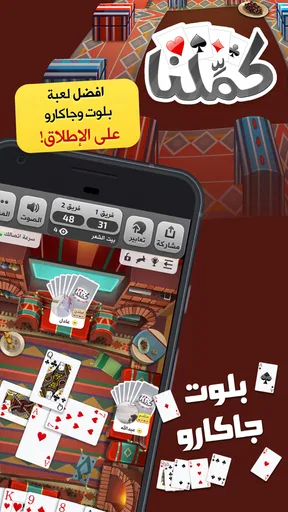
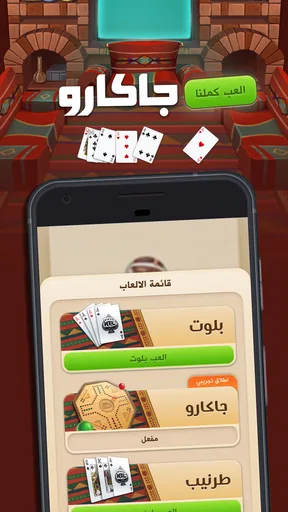
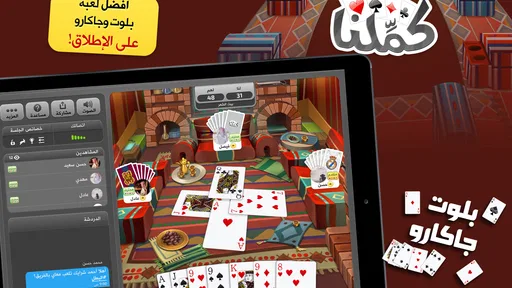
I usually approach mobile card games with one question: do they make a short break feel satisfying, or do they turn a simple match into a confusing pile of menus and interruptions? كملنا - Kammelna makes a fairly clear choice. It focuses on traditional card play, especially belotte and jackaroo, and its main appeal is the chance to bring those familiar table games to a phone. After spending time with it, I found that the strongest part is not flashy presentation but the way it keeps the attention on the cards, turns, and decisions.
Developed by Remal Information Technology, this free card game has been available since June 14, 2015. It is rated for Everyone, runs on Android 7.1 or later, and the current version is 3.9.5. The game has passed one million installs and holds an average rating of 4.1 from roughly one hundred thousand ratings, which gives a useful sense of its reach without suggesting that every player will enjoy it in the same way.
Why the card-table focus matters
The defining capability here is straightforward: Kammelna brings belotte and jackaroo into a compact mobile format. That sounds simple, but it changes how these games fit into daily life. A physical card table needs several people, a suitable place, and enough time to sit down. On a phone, the barrier is much lower. I can open the game during a quiet moment, play a few hands, and return later when I have more time.
That convenience is especially valuable for players who already know the rhythm of these games. The rules do not feel like a completely new system to learn; instead, the phone becomes the table. The experience is therefore less about discovering a complicated fantasy world and more about recreating a familiar social pastime in a digital setting.
For me, this is also where the game separates itself from many general card apps. A broad card collection may offer solitaire, poker, patience, or several unrelated formats. Kammelna feels more focused. Its identity comes from the regional card-game tradition behind belotte and jackaroo, so it is a more natural choice for someone searching for those specific styles rather than a huge menu of unrelated games.
The real strength is focused access to familiar card play. The game does not need to convince me that a short match is an epic adventure. Its job is to make a traditional game available whenever the people or table are not immediately available, and that narrow purpose gives it a clearer personality than many all-purpose card collections.
Learning the rhythm without overcomplicating it
A new player should expect some adjustment if belotte or jackaroo is unfamiliar. Card games often depend on local habits, house rules, and small details that experienced players take for granted. I would not recommend jumping in while assuming that every version of the game follows exactly the same customs. The best approach is to begin patiently, pay attention to how turns and scoring are presented, and treat the first few sessions as practice.
Worth Reading Before You Choose

EA SPORTS FC Mobile 26 Is a Bigger Football Game, but It Takes Time

Flipboard Shows What News Apps Must Do Beyond the Feed

Switching to Android Auto Means Rethinking Your Driving Routine

Google Calendar Makes a Crowded Week Easier to Manage

Ludo King Makes the Most of the Minutes Between Plans

Baby Panda World Brings Quick Play to Modern Phones, but Its Game Library Feels Busy
Once the basic flow becomes comfortable, the appeal is easy to understand. A hand gives me a compact decision cycle: watch what has already been played, consider what may remain, and decide whether a safe move or a more ambitious one makes sense. That mental loop is more interesting than simply tapping the highest card available.
Jackaroo can be particularly appealing to players who enjoy planning several moves ahead. The attraction is not only the individual card in my hand but also how that card affects position and future options. Belotte, meanwhile, rewards attention to the changing shape of a hand and to the choices made by the other side. Even without treating either game like a serious competition, both can create the satisfying feeling that a small decision mattered.
How a typical session feels in practice
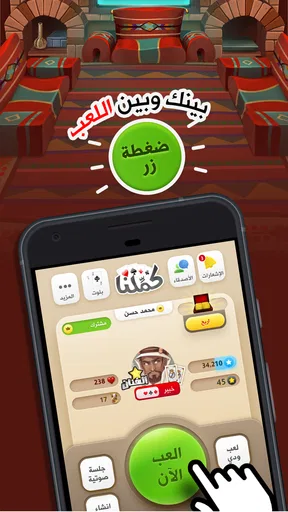
I find Kammelna best suited to short, repeatable sessions rather than one long uninterrupted campaign. The game fits naturally into the gaps between larger tasks: while waiting for an appointment, during a commute when it is safe to use a phone, or at home when I want something more engaging than scrolling. The important difference is that a match gives the break a clear beginning and end.
A realistic everyday scenario would be a family member who knows jackaroo but does not always have a physical deck nearby. Instead of searching for cards or arranging a table, they can use the app as a quick substitute. The experience will not reproduce every part of sitting together in person, especially the conversation and informal teasing around a real table, but it preserves the core decision-making that makes the game worth returning to.
Another useful situation is practicing before playing with people who already know the rules well. A beginner can use repeated hands to become less hesitant about card choices. That matters because uncertainty about basic play can make a social game uncomfortable. Digital practice offers a lower-pressure way to become familiar with the flow before joining a group.
Small habits that improve the experience
My first practical tip is to slow down during the opening hands instead of trying to play at maximum speed. Early mistakes often come from reacting to the current card without thinking about what has already left the hand. Watching the sequence helps build a mental picture of the round and makes later decisions feel less random.
Second, I would treat the game as a place to test decision habits, not merely a way to pass time. Before playing a card, I try to ask what I am protecting, what I am giving away, and whether the move helps the next turn. This makes even a familiar game feel more deliberate. It also exposes whether I am relying on impulse rather than reading the table.
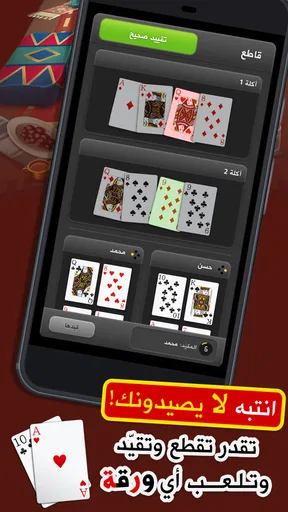
Third, players coming from physical cards should allow themselves time to adapt to the phone interface. On a real table, I can glance across every card and track the whole situation spatially. On a smaller screen, attention is more directed. I found it helpful to pause mentally between turns and review the visible information instead of tapping immediately. That habit reduces careless plays and is more important for thoughtful players than any attempt to rush through a hand.
These are not dramatic hidden systems; they are ways of using the focused design intelligently. The app works best when I treat each hand as a compact puzzle rather than as background noise. That distinction is easy to miss if I judge it only by how quickly a match can be started.
What the mobile format improves—and what it removes
The biggest improvement over a physical deck is availability. Cards do not need to be shuffled, stored, or kept on a table. The game is also easier to approach alone, which is useful when I want to practice or simply have a card-based activity ready without organizing other players.
The biggest loss is the social atmosphere of a real gathering. A phone can reproduce turns and cards, but it cannot fully reproduce the expressions, jokes, arguments over a move, or relaxed pauses that make family card sessions memorable. Anyone choosing Kammelna mainly for conversation may still prefer a physical deck when friends or relatives are present.
Compared with a generic solitaire game, Kammelna demands more awareness of the developing hand and feels more connected to shared table traditions. Compared with a broad multiplayer card collection, it offers a narrower identity. That is a benefit if belotte or jackaroo is exactly what I want, but it can feel limiting if I expect many unrelated modes in one installation.
The best setting for Kammelna
The strongest use case is a player who already enjoys belotte or jackaroo and wants those games close at hand. The app makes particular sense for someone who travels, lives away from family, or has irregular free time. It is also a reasonable entry point for a curious beginner who prefers learning through repeated play rather than reading a long rulebook first.
I would also recommend it to people who enjoy card games that reward memory and restraint. The fun is not just in receiving a good hand. A player has to notice patterns, avoid wasting useful cards, and think about what the other side may be holding. That gives the game more staying power than a purely luck-driven tap-and-win experience.
For a group that already plays these games together, the app can serve as a practice companion. One person can use it to keep their instincts sharp between gatherings, then return to the physical table with a better feel for timing and risk. I would not treat that practice as a perfect replacement for playing with friends, but it can keep the rules and strategic habits fresh.
The game is less suitable for someone who wants a highly varied card library, a long-form adventure, or a visually elaborate experience. It is also not the first choice for a player who dislikes learning regional rule variations. If my priority is solitaire-style relaxation with minimal planning, a dedicated patience game may be a better fit. If I want a large competitive ecosystem with many formats, a broader card platform may provide more variety.
Free access and the question of spending
Kammelna is free to download, which makes it easy to try without committing money first. There are in-app purchases ranging from $0.99 to $74.99 per item, so I would pay attention to the purchase flow, especially if the phone is shared with younger players. The Everyone age rating makes the game broadly accessible, but that does not mean every optional purchase is equally suitable for every household.
My advice is simple: start with the free experience and decide whether the central card play holds your attention before spending anything. A purchase should solve a genuine annoyance or add value to the way you personally use the app, not be an automatic part of getting started. Players who only want occasional hands may find the free entry enough, while frequent users should still set a clear budget.
This is one area where the game’s focused design can work in its favor. If I am here specifically for belotte or jackaroo, I do not need to buy into a large collection just to reach the format I wanted. At the same time, the presence of optional items means the app should be approached with the same spending awareness I would use for any free-to-play mobile game.
Who will get the most from it
The best match is a card player who values tradition, quick access, and repeatable decision-making. Someone who already recognizes belotte or jackaroo will understand the appeal almost immediately. The game also suits a learner who is willing to observe, make mistakes, and gradually develop a feel for the flow rather than expecting instant mastery.
Its audience is not limited to experts. Because the format is compact, a beginner can take one idea at a time: identify the objective, follow the turn order, remember what has appeared, and then think about the next move. I like that progression because it turns a potentially intimidating card tradition into manageable sessions. The important qualification is patience; players who expect every rule to be obvious from the first tap may find the early learning curve frustrating.
The developer’s long-running presence in this particular game also helps explain why the app has remained visible over time. Its release in 2015 and current version, 3.9.5, show a product that has continued beyond a brief launch window. I would still judge it by my own preferred card format and play style rather than by longevity alone, but that history makes it feel more established than a newly published experiment.
With a rating of 4.1 and more than one hundred thousand ratings, the overall response suggests that many players find the concept worthwhile. I read that as encouragement, not a guarantee. Card games are personal: a player who loves the regional formats may return often, while someone seeking cinematic presentation or a huge selection may quickly move on.
My final recommendation
I recommend كملنا - Kammelna to anyone who wants belotte and jackaroo in a convenient mobile form and is comfortable with a focused card experience. Its value comes from making a familiar table activity available in small moments, while still leaving enough room for memory, timing, and judgment to matter.
I would skip it if my main goal were a broad collection of unrelated card games, a richly staged single-player campaign, or the full social atmosphere of a physical gathering. For those needs, another type of app—or an actual deck—would be a better choice. But for the right player, this is a practical digital card table: easy to carry, free to begin, and rewarding when I slow down enough to read the hand instead of simply tapping through it.
Pros
- Simple interface makes it easy to start playing quickly.
- Supports social play
- making it enjoyable with friends and family.
- Short rounds suit quick gaming sessions on mobile.
- Offers a fun way to test general knowledge and reaction speed.
- Suitable for casual players with no complex controls to learn.
Cons
- Requires an internet connection for some features or game modes.
- Question difficulty may feel inconsistent between rounds.
- Repeated content can reduce replay value over time.
- Ads may interrupt gameplay
- depending on the version.
- Some features may require additional players to be fully enjoyable.
FAQs for كملنا - Kammelna
What is كملنا - Kammelna and what can I use it for?
كملنا - Kammelna is a social entertainment application designed around shared activities and interactive experiences. Depending on the available version and region, it may let users join rooms, communicate with friends, and take part in games or community-based features. Before downloading, check the current store description because the exact tools, supported languages, and available content can change with updates.
Is كملنا - Kammelna free to download and use?
The application can generally be downloaded without an upfront purchase, but some features may depend on in-app purchases, subscriptions, advertising, or virtual items. I recommend reviewing the pricing information shown on the Google Play Store or Apple App Store before creating an account. Also check whether purchases are optional or required for particular rooms, games, invitations, or premium content.
Does Kammelna require an account or personal information?
Kammelna may require registration so it can create a profile, save activity, connect you with other users, or allow participation in shared rooms. The information requested can vary by platform and update, potentially including an email address, phone number, username, or basic profile details. Read the privacy policy and app permissions carefully, and avoid sharing sensitive information publicly.
Can I use كملنا - Kammelna with friends, and does it need an internet connection?
The app is primarily intended for connected, social use, so an active internet connection is normally needed for joining rooms, communicating, synchronizing activity, and accessing online content. You may be able to invite friends or interact with other users through supported features, but compatibility can depend on their device and app version. A stable Wi-Fi or mobile-data connection will provide the best experience.
Is كملنا - Kammelنا safe for children and suitable for everyone?
Suitability depends on the app’s current age rating, communication tools, advertising, purchases, and the behavior of other users. If children will use Kammelna, parents should review the store rating, privacy policy, chat or messaging options, and available parental controls before allowing access. It is also sensible to disable unnecessary permissions, supervise public interactions, and use reporting or blocking tools when available.


